Posts

Showing posts with the label Inspection services

Innovative Structural Design: Pushing the Boundaries of Engineering

Image
  Structural engineering is the backbone of modern society, shaping the built environment around us. From towering skyscrapers to intricate bridges, structural engineers design and analyze structures to ensure safety, efficiency, and aesthetics. In recent years, innovative structural design has pushed the boundaries of what is possible, leading to more efficient, sustainable, and visually stunning structures. Key Trends in Innovative Structural Design Advanced Materials: High-Strength Steel: This material offers exceptional strength-to-weight ratios, enabling the construction of slender and lightweight structures. Composite Materials: These materials, such as carbon fiber and fiberglass, provide high strength and stiffness, making them ideal for applications where weight reduction and durability are critical. Concrete: Advances in concrete technology, including high-performance concrete and self-healing concrete, have led to stronger, more durable, and sustainable structures. Di...

Failure Analysis Techniques: A Comprehensive Guide

Image
  Failure analysis is the process of investigating the cause of a failure or malfunction of a component, system, or structure. It is a critical tool for improving product reliability, safety, and performance. There are many different failure analysis techniques available, each with its own strengths and weaknesses. In this blog post, we will provide a comprehensive overview of some of the most common failure analysis techniques. Visual Examination Visual examination is the simplest and most basic failure analysis technique. It involves inspecting the failed component with the naked eye or using a magnifying glass or microscope. Visual examination can often reveal clues about the cause of failure, such as cracks, corrosion, or wear. Dimensional Inspection Dimensional inspection is used to measure the dimensions of a failed component and compare them to the original specifications. This can help to identify manufacturing defects, wear, or other mechanical problems. Material Testing M...

Mechanical Engineering Solutions for Complex Industrial Challenges.

Image
  The industrial landscape is constantly fluctuating between innovation and efficiency. As industries grapple with complex challenges, mechanical engineering solutions emerge as the invisible orchestra conductors, harmonizing processes, optimizing production, and driving progress. This blog explores the fascinating world of mechanical engineering solutions and their vital role in tackling some of industry's toughest hurdles. The Mechanical Masterminds: Who are Mechanical Engineers? Mechanical engineers are the problem-solvers of the physical world. They possess a unique blend of creativity and technical expertise, allowing them to design, analyze, develop, and improve mechanical systems and devices. These engineers are the masterminds behind the machines that power our industries, from the intricate mechanisms in factory robots to the powerful engines that propel airplanes. The Industrial Battlefield: Common Complexities Faced by Industries. Modern industries face a multitude of c...

The Science Behind Materials Integrity: Metallurgical Process Evaluation for Quality Improvement.

Image
The success of any engineered structure, from towering skyscrapers to airplanes, are totally dependent on the integrity of their materials. But how do we ensure these materials perform as expected? By learning about metallurgy , the science and engineering of metals. Here, we gain insights into the power of metallurgical process evaluation and how it contributes to material testing and ultimately, quality improvement . Understanding the Building Blocks: The Role of Metals. Metals are the backbone of modern construction. From steel beams in buildings to aluminum frames in vehicles, their unique properties – strength, ductility, and conductivity – make them invaluable. However, the performance of a metal component depends heavily on its microstructure, a complex internal arrangement of grains and phases. Factors like heat treatment, processing techniques, and even the presence of impurities can significantly impact a metal's behavior. Material Testing: Unveiling the Secrets Within t...
Image
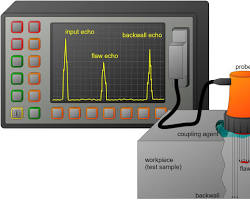
  Top 5 Non-Destructive Testing Methods Safeguarding the Aerospace and Defence Industry “ According to BIS Research, the global non-destructive testing services in the aerospace and defence market are estimated to reach $1.81 billion in 2033 from $1.29 billion in 2022, at a CAGR of 3.34% during the forecast period 2023–2033 .” The aerospace and defence industry heavily relies on the utmost safety and reliability of its components. Non-destructive testing (NDT) plays a crucial role in ensuring these standards are met by detecting flaws and defects in materials and components without causing any damage. Here are the top 5 NDT methods safeguarding the aerospace and defence industry. Ultrasonic Testing (UT) : UT involves the use of high-frequency sound waves to penetrate materials and bounce back when they come across a crack or void. This type of testing is idealfor detecting internal defects in materials components. Radiographic Testing (RT): RT uses X-rays or gamma rays to cre...